Texas Tribune.
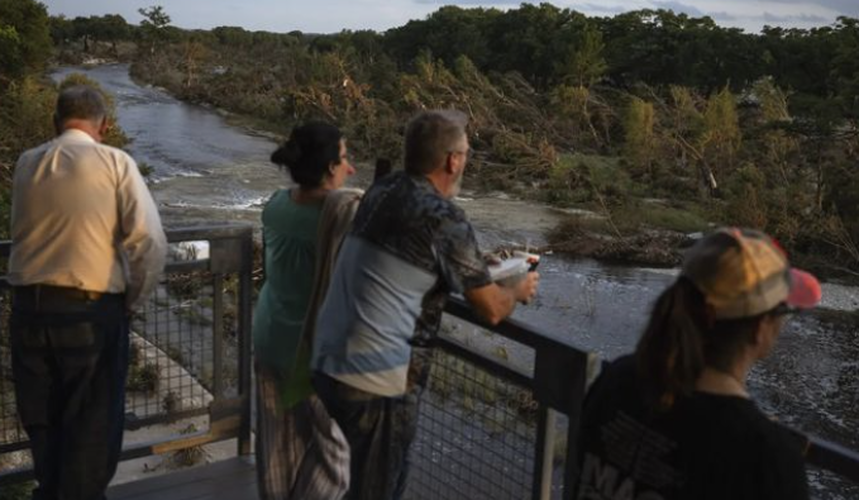
Hasta el momento, solo alrededor de una quinta parte de los solicitantes de asistencia federal por desastre del condado de Kerr han sido considerados elegibles para obtener ayuda financiera, lo que deja a cientos sin ayuda gubernamental más de tres meses después de que las inundaciones mortales devastaran el condado el 4 de julio.
Hasta el 11 de octubre, los funcionarios de la Agencia Federal para el Manejo de Emergencias habían remitido solo el 46% de las solicitudes del condado de Kerr para su Programa de Individuos y Hogares a la siguiente etapa, donde se evalúan para recibir dinero, según muestra un análisis de datos federales realizado por Texas Tribune.
Esto significa que 1.749 solicitudes de 3.228 aún no han sido revisadas más allá de la etapa inicial.
Y entre las solicitudes del condado de Kerr que los funcionarios revisaron para obtener fondos específicos, FEMA solo encontró elegibles 704, o aproximadamente el 22 %. La agencia rechazó 775, principalmente porque las personas no respondían o retiraban sus solicitudes.
En comparación, la investigadora Sarah Labowitz del Carnegie Endowment for International Peace descubrió que después de 170 desastres entre 2015 y mayo de 2024, FEMA encontró que el 39% de los solicitantes de ayuda individual y familiar eran elegibles.
La baja proporción de derivaciones y aprobaciones contrasta con la de otros nueve condados del centro de Texas que sufrieron daños significativos por inundaciones durante el fin de semana festivo. Los demás condados tuvieron menos solicitantes, reportaron daños menos extensos y han recibido una mayor proporción de aprobaciones de FEMA. La agencia ha aprobado $37 millones hasta la fecha.
La disparidad ha hecho que los defensores se pregunten qué está pasando en el condado de Kerr, donde la mayoría de las muertes por inundaciones ocurrieron cuando el río Guadalupe creció en las primeras horas de la mañana del 4 de julio.
FEMA no respondió a las solicitudes de comentarios para este artículo. La agencia no está plenamente operativa durante el cierre del gobierno federal; a principios de este año, la Casa Blanca solicitó una “revisión exhaustiva” de FEMA, la cual el presidente Donald Trump ha amenazado con eliminar.
Tras un desastre, el dinero de FEMA se destina a cubrir los gastos de hotel o alquiler, la reparación de viviendas para hacerlas habitables y las necesidades médicas y de transporte. Sin este dinero, las personas pierden un recurso importante, especialmente si no cuentan con seguro, ahorros ni crédito, explicó Maddie Sloan, directora del Proyecto de Recuperación de Desastres y Vivienda Justa de la organización sin fines de lucro Texas Appleseed, que también ha estado dando seguimiento a las aprobaciones .
“Si lo has perdido todo y no tienes acceso a otros recursos, aquí es donde puedes obtener ayuda con la vivienda, donde puedes obtener ayuda con el auto que necesitas para ir al trabajo, con la computadora y los libros que tu hijo necesita para regresar a la escuela”, dijo Sloan.
En el condado de Kerr, las organizaciones sin fines de lucro están ayudando a cubrir las necesidades. La Primera Iglesia Presbiteriana de Kerrville ha donado $250,000 que recibió en donaciones privadas para reparar techos, reemplazar vehículos o cubrir el alquiler, entre otras cosas. Recibió $557,500 adicionales de la Fundación Comunitaria de Texas Hill Country, que recaudó la impresionante suma de $100 millones, y la cifra sigue aumentando, para ayudar a la zona a recuperarse.
Bailey Havis, a case manager at the church, has heard agonizing stories from flood victims as she helps them: A mom who survived by clinging to what she called “the tree of life;” people whose family reunion happened to be at the River Inn, among the first places hit by the flooding; a travel nurse staying in a travel trailer whose husband invited his parents to stay nearby for the July 4 holiday. His parents died. They also lost the trailer.
“These are our people and we want to get them to full recovery — which is many years down the road — but physical recovery as soon as possible,” Havis said.
The foundation is now covering the salary for Havis, a Kerrville native who grew up going to the church. She’s a pediatric nurse by training whom the church hired soon after the flooding to help connect people with resources. She said the foundation could help without requiring them to wade through a mountain of paperwork.
Even people who have received FEMA aid have felt some disappointment at what they received compared to their need, said the church’s pastor, Jasiel Hernandez Garcia.
For some, he said, “It’s really minimal.”
Most denials because of non-response or voluntary withdrawal
Why FEMA isn’t referring Kerr County applications for evaluation is not revealed in the data, but they have some commonalities.
They are predominantly over 50 and largely applying online, as opposed to through a call center, the Tribune’s analysis found. Most of them reported damage in Kerrville.
For those who have been denied aid by FEMA, the top reason is failing to respond to the agency or voluntary withdrawal.
Advocates say cell service in the area is spotty and not everyone has easy access to the internet and computers to communicate with FEMA. People may not even have a phone after the disaster or may not be comfortable navigating online forms. They may not be emotionally prepared to gather all the necessary information.
Without federal assistance, people may leave the area because they can’t afford to make it liveable again, said Brittanny Perrigue Gomez, an attorney and disaster benefits team manager with Texas RioGrande Legal Aid. Being short on money for home repair can also snowball into other problems if people get behind on other bills to pay.
“Individuals need to be able to start to financially recover, and the first way you do that is by getting yourself back into a safe place to live,” Gomez said.
The organization is now working on more than 140 cases from Kerr and the surrounding counties, many of them needing help with FEMA applications. Common issues include people lacking clear titles to their manufactured homes or RVs, or homes they informally inherited. Others have told the group they feel they aren’t getting enough money to make their homes safe to live in, Gomez said.
FEMA no longer sends people knocking door-to-door to tell flood victims how they can sign up for help and answer questions on what is needed to apply, Sloan said. It’s also not clear if those who are denied understand why, or that they can appeal FEMA’s decision. And FEMA now requires an email address for people to apply — which not everyone has.
“It’s yet another burden on somebody who has just been through one of the worst days of their life,” Sloan said.
Nonprofits jumped to action
Austin Dickson, the community foundation’s chief executive officer, had been hosting family at his home in the Kerrville area for the July 4 holiday. The night before the storm, they played board games and went to sleep late. By the time Dickson woke up, had a cup of coffee and looked at his phone, he saw lots of texts and alerts. He started to realize something bad had happened.
The Community Foundation of the Texas Hill Country staff knew from helping after past disasters that philanthropy could play an important role. They created a relief fund at 9:48 a.m. on July 4.
“We had no idea what was to come,” Dickson said.
The fund took off as the scope of the devastation became clear, Dickson said. More than 100 people died in Kerr County, including generations of families spending the holiday by the river and 27 campers and counselors at Camp Mystic.
The foundation worked with attention and speed; it doled out $11.9 million by the end of July to local nonprofits to provide cash assistance to victims and small businesses and to help volunteer fire departments and shelters. Families on average got $5,000 in those first weeks.
“Help got where it needed to go,” Dickson said, adding, “The (financial aid) resources of government are not in operation in week one and week two, and so there is a need in those early days, where there’s resources, for philanthropy to step in early. That was what we chose to do, and I think it was the right call.”
Next the foundation supported various long-term housing, mental health and community resources. It gave out money to help repair homes, replace RVs used as primary residences, pay rent for temporary housing and fund 28 case managers to be hired by various nonprofits. Those case managers would aim to work with the 673 flood victims who signed up with the foundation to get help.
“Every dollar matters,” said Michelle Meyer, an associate professor at Texas A&M and director of the Hazard Reduction and Recovery Center. “The folks that usually end up in the nonprofit system are usually folks who are uninsured, underinsured. They might have folks in their house with disabilities. Elderly (folks) a lot of times end up in the nonprofit recovery space. You need every dollar to try to get folks back.”
Airbnb.org , una organización sin fines de lucro fundada por Airbnb hace cinco años, proporcionó alojamiento de emergencia a cientos de socorristas y personas con viviendas inundadas. La fundación otorgó al grupo 1,6 millones de dólares para proporcionar alojamiento durante un año a 60 personas o familias con viviendas dañadas por las inundaciones, especialmente a aquellas con dificultades económicas.
“Esas son las personas de las que realmente queremos asegurarnos que no queden marginadas”, dijo Christoph Gorder, director ejecutivo de la organización sin fines de lucro.