
Tribuna de Texas.
Se han reportado al menos 14 casos activos de sarampión en un campamento de El Paso con más de 3,000 inmigrantes, según informó el martes la representante demócrata Verónica Escobar . Otras 112 personas en el centro se encuentran aisladas.
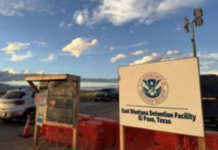
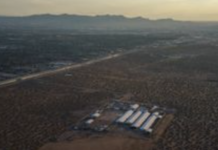
El brote ha cerrado el centro de detención a las visitas, lo que reafirma lo que Escobar y sus defensores llaman una “crisis humanitaria en desarrollo” en el Campamento East Montana, ubicado en la base militar estadounidense de Fort Bliss. Esto ocurre tras una oleada de brotes de tuberculosis y COVID-19 durante el último mes y las crecientes quejas de legisladores y defensores sobre el deterioro de las condiciones allí.
Escobar afirmó que el brote también representa un riesgo para la comunidad de El Paso en general, y añadió en un comunicado que los detenidos con sarampión estaban en cuarentena en hospitales locales. Además de los miles de personas recluidas en el campamento, señaló que “probablemente cientos de paseños trabajan allí, junto con 56 miembros de la Guardia Nacional de Texas”.
Sin embargo, durante más de media docena de visitas de supervisión al campamento, incluida la más reciente de la semana pasada, Escobar dijo que nunca había visto al personal usando máscaras para prevenir la propagación de enfermedades tan altamente infecciosas.
La declaración de Escobar se produjo después de que el Departamento de Salud Pública de la Ciudad de El Paso confirmara 13 casos de sarampión en las instalaciones de ICE y cuatro casos adicionales dentro de la ciudad la semana pasada, negándose a ofrecer detalles.
Los casos dentro de la comunidad involucraron a cuatro personas de entre 20 y 30 años con estado de vacunación desconocido, aunque alrededor del 98% de los residentes del condado de El Paso están vacunados contra el sarampión, según funcionarios de la ciudad.
Los portavoces de la ciudad y su departamento de salud pública no respondieron a las preguntas del martes, incluyendo cómo contrajeron la enfermedad los cuatro residentes de la comunidad. Sin embargo, la semana pasada, la portavoz municipal, Laura Cruz-Acosta, declaró a The Texas Tribune que los casos de sarampión dentro del centro de detención y en la comunidad no están relacionados. Ni ella ni los funcionarios del departamento de salud han respondido a las preguntas para explicar el rastreo de contactos.
Un portavoz del Departamento de Servicios de Salud del Estado de Texas, Chris Van Deusen, remitió las preguntas sobre los casos de sarampión en el centro de detención al Departamento de Seguridad Nacional y los casos en la comunidad al departamento de salud local. Esto último representa un cambio radical con respecto al histórico brote estatal de sarampión del año pasado, que infectó a 762 personas; en ese brote, la agencia estatal proporcionó actualizaciones semanales sobre los nuevos casos durante meses.
Van Deusen escribió en un correo electrónico que el papel del estado en las instalaciones federales es muy limitado, pero que su agencia suele coordinarse con los departamentos de salud locales si necesitan asistencia, en particular contra el sarampión, que es altamente contagioso. En enero, la agencia respondió a los casos de sarampión en el Centro Residencial Familiar del Sur de Texas en Dilley, el único centro del ICE del país que alberga a niños y sus padres, incluso proporcionando dosis de vacunas. El Campamento East Montana solo alberga a adultos.
Spokespeople for the Department of Homeland Security and Immigration and Customs Enforcement did not respond to detailed questions about the El Paso outbreak or Escobar’s claims on Tuesday.
In a statement last month, a DHS spokesperson defended its handling of medical care at Camp East Montana, saying, “This is the best healthcare that many aliens have received in their entire lives.”
“No lawbreakers in the history of human civilization have been treated better than illegal aliens in the United States,” wrote the spokesperson, who did not provide their name. “Get a grip.”
Measles, which is particularly dangerous to unvaccinated children, pregnant women and immunocompromised adults, has a long incubation period, said Peter Hotez, a leading infectious disease expert and dean for Baylor College of Medicine’s National School of Tropical Medicine in Houston. A person with measles can spread it to as many as 18 other unvaccinated individuals on average and they remain contagious for about four days before and after the rash appears. Investigations are necessary to understand how the infections happened, Hotez said.
It’s not clear whether the federal government has conducted any such inquiry into the measles cases at either the Dilley center or the El Paso camp. DHS has not responded to multiple questions about its contact tracing and handling of the infectious diseases. A U.S. Department of Health and Human Services spokesperson also directed questions to DHS. The vaccination coverage at either ICE facility is also not clear.
Escobar and lawyers said the latest public health “crisis” at Camp East Montana underscores the mounting complaints of poor medical care there. Detainees with serious medical issues are often without services, which advocates said can be non-existent even for those with urgent needs. Pregnant women and those with diabetes and HIV have been unable to obtain care. Some, including a man with a broken foot, have been on the waiting list for medical help since September, advocates said.
“There has been nothing but crisis after crisis inside the walls of this tent city,” Escobar said Tuesday. “I again renew my call for DHS to shut down Camp East Montana and for the Department of Justice to investigate the contractor for fraud.”
In a letter to DHS last week, Escobar and more than two dozen Democrats said that the administration should close the tent camp, which is currently the largest ICE facility in the country. Constructed in a record two months after a $1.2 billion contract was granted to Acquisition Logistics, a Virginia-based company with no listed related experience, it is viewed as a model for more than two dozen ICE facilities the government plans to convert into detention centers across the country, including several in Texas.
Spokespeople for Acquisition Logistics and two of its contractors in charge of detention and medical care at Camp East Montana did not immediately respond to questions or could not be reached Tuesday.
“For the safety of everyone at the facility, for an end to abuses to detainees, and for fiscal responsibility to the American people,” Escobar and other lawmakers wrote, “the site cannot continue to operate.”
More than 45 people detained at Camp East Montana have alleged abuse and serious injuries to attorneys, according to a letter the American Civil Liberties Union and other advocacy groups sent to DHS and ICE supervisors in December. Those allegations included a teen hospitalized after he accused staff of slamming him to the ground and beating him. The detention staffers blocked the security cameras, he said, and “grabbed my testicles and firmly crushed them.”
Separately, in a span of six weeks starting in mid-December, three people have died at the camp.
The first death, 48-year-old Francisco Gaspar-Andres, appeared to “partially be the result of poor medical care by staff,” Escobar and other lawmakers wrote. They argued that despite seeking medical attention from facility staff for “increasingly serious symptoms,” Gaspar-Andres was only hospitalized “once his condition had severely deteriorated.” His family reiterated such complaints of poor medical care to the Tribune.
A month later, 55-year-old Geraldo Lunas Campos died at the facility after ICE officials initially attributed his death to “medical distress.” The agency later said it was a suicide attempt. But the local medical examiner ruled it a homicide involving staff – an unusual development that former ICE officials said has not occurred in at least 15 years.
Six detainees described in federal court statements that Lunas Campos begged for days to receive his asthma medication. Detention staff refused and threatened him with solitary confinement, inmates said. After Lunas Campos was dragged in shackles to an isolation unit, detainees recalled “what sounded like the slamming of a person’s body against the floor or a wall.” They said they heard him gasp that he could no longer breathe. Then, “silence.” ICE last week quietly updated Lunas Campos’ cause of death, finding it the result of staff’s “spontaneous use of force” to prevent him “from harming himself.”
Eleven days after Lunas Camps died, 36-year-old Victor Manuel Diaz marked the tent camp’s third fatality. Guards told emergency responders that they found the Nicaraguan man with pants tied around his neck, a characterization of suicide that his family has disputed.
El cuerpo de Díaz fue enviado a un hospital del ejército de Estados Unidos , en lugar de al médico forense local, donde un portavoz militar dijo que la agencia no haría pública su autopsia.
Este artículo apareció por primera vez en The Texas Tribune .